0. Intro / はじめに
VIETNAM'S SOCIO-ECONOMIC
DEVELOPMENT No.1, SPRING 1995
VIETNAM'S ECONOMY IN THE REFORM PROCESS
Dr. VU TUAN ANH
Institute of Economics, Hanoi
Vietnam has undergone many economic, social, management and
diplomatic changes in the past decade. Three main orientations for
reform are being put into practice:
- First, in the economic field, to operate a shift from a centrally
planned economy to a market economy;
- Second, in social life, to carry out a process of intensified
democratization and at the same time to build a legally authoritative
state of the people, by the people and for the people;
- Third, in international relations, to practise an open-door policy,
step up communications and cooperative relations with the outside
world for the sake of peace, independence and development.
This reform of socio-economic policies has been unfolding in the
context of a rapidly changing world. Those global changes have had a
direct and extremely vigorous effect on Vietnam's socio-economic
development. Under the influence of reform, the socio-economic
situation in Vietnam has undergone fundamental change.
VIETNAM'S SOCIO-ECONOMIC DEVELOPMENT No.1, SPRING 1995
改革過程にあるベトナム経済
Dr. VU TUAN ANH
経済研究所(ハノイ)
ベトナムはこの10年間に、経済・社会・管理・外交の面で多くの変化を経験してきた。
改革の主要な方向性として、次の3点が実践に移されている。
- 第一に、経済分野では、中央計画経済から市場経済への転換を進めること。
- 第二に、社会生活においては、民主化をいっそう推し進めると同時に、
「人民の、人民による、人民のための」法治的権威国家を建設すること。
- 第三に、国際関係では、開放政策を実施し、平和・独立・発展のために、
対外的な交流と協力関係を拡大すること。
こうした社会経済政策の改革は、急速に変化する世界の中で進行してきた。
その世界的変化は、ベトナムの社会経済発展に直接かつ非常に強い影響を与えた。
改革の影響の下で、ベトナムの社会経済状況は根本的な変化を遂げた。
1. 経済成長 / 1. ECONOMIC GROWTH
In the years 1979-1980, owing to cuts in aid from outside and the U.S. led economic blockade, Vietnam underwent a deep economic crisis. In face of such circumstances, Vietnam gradually issued a series of adjustment policies oriented toward liberalization and marketization, considering them to be situational solutions. But it was initial changes at micro level that led to the reconsideration of the directions regarding development, and to the ultimate adoption of proper economic policies at macro level.
A line for economic reform oriented toward the market economy was proclaimed by the leading body of Vietnam in 1986 which was subsequently followed by a series of reforms to be strictly implemented by the whole country. The result was that when embarking on the 1990s, Vietnam's economy was restructured to conform to a market mechanism.
Freed from the grip of the rigid centralized planning system, economic activities have developed with redoubled vigour. In the four years 1991-1994 taken together, on an average, the GDP increased every year by 7.9 percent (see Figure 1).
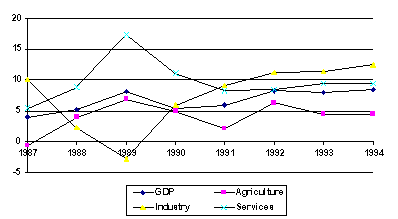
Source : Statistical Yearbooks of Vietnam 1992, 1993.
In the difficult conditions of an economy transfering to a market
mechanism, in addition to a sudden cut in main financial aid from the
former Soviet Union and Eastern European countries with a concurrent
loss of export markets to these countries, the economic growth rates
can only be described as a highly significant success for Vietnam.
The level of economic growth has three advantages. First, that
economic growth rate is far higher compared with previous years.
Though having no data for the GDP rate in the years before 1986, but
compared only with the period 1986-1990, the growth rate of the first
years of the 1990s has already doubled. Second, the growth rate has
remained stable, while in previous period, the economic growth
suffered irregular increases and decreases with large oscilations.
Third, what is most important is that the economic growth rate did
not rely mainly on a great source of external aid.
Compared with several countries in Asia, Vietnam in recent years has
recorded a rate of economic growth of medium range (see Table 1).
Table 1 : GDP growth rate of Vietnam and several other Asian
countries (%)
|
|
|
|
|
|
|
| |
|
China |
|
|
|
|
|
|
|
|
Hong Kong |
|
|
|
|
|
|
|
|
Indonesia |
|
|
|
|
|
|
|
|
India |
|
|
|
|
|
|
|
|
South Korea |
|
|
|
|
|
|
|
|
Malaysia |
|
|
|
|
|
|
|
|
Philippines |
|
|
|
|
|
|
|
|
Singapore |
|
|
|
|
|
|
|
|
Taiwan |
|
|
|
|
|
|
|
|
Thailand |
|
|
|
|
|
|
|
|
Vietnam |
|
|
|
|
|
|
|
Source : Asian Economic Outlook 1993. ADB. 1994
The growth rate in two important branches of Vietnam's material
production, namely agriculture and industry, differed much from each
other.
Agricultural production still constitutes a branch of primary
importance in Vietnam's economy, attracting 70 per cent of the
work-force and producing as much as nearly 40 per cent of the
GDP.
Due to the achievements in the improvement of irrigation systems, in
the supply of new varieties of seeds and also as a result of reform
policies, food production has rapidly and continually increased from
1988 to now. The growth index of food production was higher than the
population growth rates. For that reason, food output per capita has
increased with passing years. The indicator was only 281 kg of rice
in 1987; it increased to 349 kg in 1988, 349 kg in 1989, 324 kg in
1990, 325 kg in 1991, 349 kg in 1992, 359 kg in 1993 and it
maintained the level of 359 kg in 1994. With such a growth in
agricultural production, Vietnam has ensured safety in food supply.
Vietnam is exporting 2 million tons of rice per year. The total food
output would decrease by about 1 million tons if there were crop
failures owing to natural disasters, that is to say the part of
export rice was only affected, but this decrease in food production
did not cause any shortage of food to home consumers.
Food safety is an important requirement for an agricultural country
such as Vietnam. In economic aspects, it has created conditions for a
change of structure in agriculture itself. The farmers are no longer
to produce food at all cost as they did in the past. They can now
make calculations about economic effectiveness and select the plant
species which may bring them higher income. In the 1990s, the
increase of output in non-food plants is higher than the growth rate
of the whole agricultural production and of food crops. For instance,
the average annual rate of increase in peanuts during the period
1991-1993 was 6.8 percent, in tea 6.6 percent, in mulbery 16.9
percent, in rubber 6.5 percent, in coffee 7.4 percent. Buffalos,
cattle, pigs, ducks and chickens have also been the object of large
scale farming to meet population food requirements, and enough jobs
have been created for farmers in practicing animal husbandry and
constitute a source of profits to supplement their income.
The difficulty lying now in agriculture are the low prices of
agricultural products and the lack of a consumption market. Products
destined for exportation are mainly in crude form, and there's steady
market. Though the State pays much concern to supporting and
assisting agricultural production by investing in irrigation works
and developing an extensive network of technical services to farmers,
the results obtained were rather limited as the State lacks
funds.
Agricultural production has not become high intensive farming in many
areas, even in the Mekong river delta. In recent years, the average
rice yield in southern provinces almost stood level at 3.5
tons/hectare, while in northern provinces, due to intensive farming
and use of high-yielding varieties, rice output has increased from
2.8 tons/hectare in 1990 to 3.7 tons/hectare in 1994.
Compared with other rice-growing countries in Asia, the rice yield in
Vietnam is still low. For instance, the average rice yield in
Indonesia is at present 4 tons/hectare, in Yunnan (China) 4.2
tons/hectare. Due to lack of investment, both intensification and
expansion of the acreage under rice cultivation are much restricted.
The coefficient of land rotation is not yet high. The capacity of
growing a third crop in winter has not been utilized. Liverstock
breeding has increased in intensity, but it still remains a secondary
branch. The average pork output per capita in 1994 was only about 9
kg.
After a period of recession in 1989-1990, industrial production has
completely recovered and started to record a high growth. On an
average, during the three last years 1991-1993, industrial growth
rate was 13.2 per cent per year. A number of important items such as
electric power, crude oil, cement, steel and paper have gained a high
and steady growth rate due to concentrated capital investments. A
number of other industrial products, though not having a monopoly and
facing strict competition by imported goods, have always secured a
good growth rate. Those include iron and steel for construction,
fertilizers, transformers, soaps, detergents, plastic goods, leather
products, electronic appliances, beer and soft drinks. (See Table
2).
Table 2: Some main products of the industry 1990-1994
|
Products |
1990 |
1991 |
1992 |
1993 |
1994* |
|
Electric power (Bil.KWh) |
8.79 |
9.31 |
9.82 |
10.85 |
12.69 |
|
Crude oil (Mil.tons) |
2.7 |
4.0 |
5.5 |
6.3 |
7.0 |
|
Cement (Mil.tons) |
2.53 |
3.13 |
3.72 |
4.85 |
5.17 |
|
Paper (Thous.tons) |
79 |
109 |
118 |
128 |
139 |
|
Steel (Thous.tons) |
101 |
149 |
196 |
243 |
250 |
|
Fertilizers (Thous.tons) |
354 |
450 |
530 |
714 |
788 |
|
Beer (Mil.liters) |
100 |
131 |
169 |
230 |
276 |
|
Fabrics (Mil.meters) |
318 |
280 |
275 |
310 |
* Estimated data
Source: General Statistical Office.
However, industry now is facing great trials no matter how big
the index. Machinery and equipment are not adequately available, not
to mention the low technical skills and poor technologies of the
indigenous industrial establishments which can not compete with
foreign-imported goods. A number of foodstuffs processing industries
and industrieal branches such as textiles and mechanical ingineering,
are in a state of stagnation and decline before harsh competition
from outside, especially the dirt-cheap goods from China. In 1993,
over one-third of the main products in the country were cut in output
as compared to 1992. Such products as diezel engines, water pumps,
insecticide sprayers, manual farm instruments, cotton and silk
fabrics, and ready-made garments reduced output from 20 to 50 per
cent. It is of utmost necessity to counter smuggling of foreign goods
and to use the custom barriers in a rational manner to protect
home-made products. But the way out of the state of depression for
industry should be first and foremost the renewal of equipment and
technology, and a change in business strategy and product
assortiment. It is predicted that in years ahead, industry may gain a
rate of growth of over 10 per cent per year if conditions are
favourable.
Although it would be possible to maintain the GDP growth rate for a
number of years ahead with increased investments from inside the
country and abroad, it should be envisaged to see to structural
change and industrialization in order to avoid the danger of a
declining growth rate by the end of this decade. This could be
explained by an analysis of structural change in the economy.
1980年代以前、ベトナム経済は中央集権的な計画体制の下で運営されていた。
この仕組みは戦時条件には適合し、利用可能な国の資源を動員して民族解放と国家再統一に奉仕するうえで、
積極的な役割を果たした。
しかし、1975年以降、平時の社会経済発展段階においては、
6,000万人を超える人口を有する国で、国家があらゆる経済部門を主導し、すべての経済活動を管理することは非効率であり、
かえって発展を阻害することが明らかになった。
1979~1980年には、対外援助の削減と、米国主導の経済封鎖により、ベトナムは深刻な経済危機に陥った。
こうした状況に直面して、ベトナムは自由化と市場化に向けた一連の調整政策を段階的に打ち出し、
それらを状況対応的な解決策として位置づけた。
しかし、ミクロレベルでの初期的変化こそが、発展の方向性の再検討を促し、
最終的にはマクロレベルで適切な経済政策が採択されるに至った。
市場経済志向の経済改革路線は、1986年にベトナム指導部によって宣言され、
その後、全国で厳格に実施されるべき一連の改革が続いた。
その結果、1990年代に入る頃には、ベトナム経済は市場メカニズムに適合するよう再編された。
硬直的な中央計画体制の束縛から解放され、経済活動は倍加した活力で発展している。
1991~1994年の4年間を合計すると、平均してGDPは毎年7.9%増加した(図1参照)。
図1:GDP成長率
出所:ベトナム統計年鑑 1992、1993。
市場メカニズムへ移行する経済の困難な条件下で、
旧ソ連および東欧諸国からの主要な財政援助が突如として断たれ、同時にそれらの国々への輸出市場も失った。
そのような状況において、経済成長率はベトナムにとってきわめて重要な成功と評価できる。
この経済成長には3つの利点がある。
第一に、成長率は過去と比べてはるかに高い。
1986年以前のGDP成長率データはないが、1986~1990年と比較しても、
1990年代初期の成長率はすでに2倍となっている。
第二に、成長率が安定している点である。
以前は成長が不規則で、大きな振れを伴う増減を繰り返していた。
第三に、最も重要な点として、この成長は外部援助という大きな財源に主として依存したものではなかった。
アジアのいくつかの国と比較すると、近年のベトナムは中位の経済成長率を記録している(表1参照)。
表1:ベトナムおよびアジア数か国のGDP成長率(%)
| 1987 | 1988 | 1989 | 1990 | 1991 | 1992 | 1993 | |
| 中国 | 10.9 | 11.3 | 4.4 | 3.9 | 7.5 | 12.8 | 1.0 |
| 香港 | 14.5 | 8.0 | 2.8 | 6.2 | 4.2 | 3.0 | 6.1 |
| インドネシア | 4.9 | 5.8 | 7.5 | 7.1 | 6.6 | 5.9 | 6.3 |
| インド | 4.3 | 10.9 | 5.6 | 5.2 | 1.2 | 4.2 | 5.4 |
| 韓国 | 12.0 | 11.5 | 6.2 | 9.2 | 8.4 | 4.5 | 6.0 |
| マレーシア | 5.4 | 8.9 | 9.2 | 9.7 | 8.7 | 8.0 | 8.0 |
| フィリピン | 4.8 | 6.3 | 6.1 | 2.7 | -0.7 | 0.0 | 2.3 |
| シンガポール | 9.4 | 11.1 | 9.2 | 8.3 | 6.7 | 5.8 | 5.8 |
| 台湾 | 12.3 | 7.3 | 7.6 | 4.9 | 7.2 | 6.6 | 6.8 |
| タイ | 9.5 | 13.2 | 12.0 | 10.0 | 8.2 | 7.5 | 7.8 |
| ベトナム | 4.0 | 5.2 | 8.0 | 5.3 | 6.0 | 8.3 | 8.0 |
出所:Asian Economic Outlook 1993(ADB)、1994。
ベトナムの物的生産の重要な2部門、すなわち農業と工業の成長率は大きく異なっている。
農業生産は依然としてベトナム経済における最重要部門であり、
労働力の70%を吸収し、GDPの約40%近くを生み出している。
灌漑施設の改善、新品種の種子供給、そして改革政策の効果により、
食料生産は1988年以降、急速かつ継続的に増加してきた。
食料生産の成長指数は人口増加率を上回った。
その結果、一人当たり食料生産量は年を追って増加した。
指標は1987年には米換算で281kgにすぎなかったが、
1988年349kg、1989年349kg、1990年324kg、1991年325kg、
1992年349kg、1993年359kgへと上昇し、1994年も359kgの水準を維持した。
このような農業生産の成長により、ベトナムは食料供給の安全を確保した。
ベトナムは年間200万トンの米を輸出している。
自然災害により不作が生じれば総食料生産は約100万トン減少し得るが、
影響を受けるのは主として輸出米であり、国内消費向けの食料不足を引き起こすことはない。
食料安全は、ベトナムのような農業国にとって重要な要請である。
経済面では、農業内部の構造転換の条件を作り出した。
農民は過去のように「何が何でも食料を生産する」必要がなくなった。
経済効率を計算し、より高い所得をもたらす作物を選択できるようになった。
1990年代には、非食料作物の生産増加が、農業全体や食料作物の成長率を上回っている。
たとえば1991~1993年の年平均増加率は、落花生6.8%、茶6.6%、桑16.9%、ゴム6.5%、コーヒー7.4%であった。
また、水牛・牛・豚・アヒル・鶏などの家畜も、人口の食料需要に応えるため大規模飼育の対象となり、
畜産の実践によって農民の雇用が生まれ、所得を補う利益源ともなっている。
現在の農業における困難は、農産物価格の低さと消費市場の不足である。
輸出向け製品は主として未加工(粗製)の形態であり、市場も安定していない。
国家は灌漑事業への投資や、農民向け技術サービス網の拡充によって農業生産の支援に大きな関心を払っているが、
資金不足のため成果は比較的限定的であった。
農業生産は多くの地域で、メコンデルタにおいてさえ、高度集約的農業には至っていない。
近年、南部諸省の平均米収量はおおむね1ヘクタール当たり3.5トンで横ばいであった。
一方、北部諸省では集約的農業と高収量品種の利用により、
米収量は1990年の2.8トン/haから1994年には3.7トン/haへ増加した。
アジアの他の稲作国と比較すると、ベトナムの米収量は依然として低い。
たとえばインドネシアの平均収量は現在4トン/ha、中国雲南省では4.2トン/haである。
投資不足のため、集約化と作付面積の拡大は大きく制約されている。
土地の輪作係数はまだ高くない。
冬季の三期作(第3作)の可能性は十分に活用されていない。
畜産は強度を増しているが、依然として副次的部門にとどまる。
1994年の一人当たり豚肉生産量は約9kgにすぎなかった。
1989~1990年の後退期を経て、工業生産は完全に回復し、高成長を記録し始めた。
1991~1993年の直近3年間の平均では、工業成長率は年13.2%であった。
電力、原油、セメント、鋼鉄、紙といった重要品目は、
資本投資の集中により高く安定した成長率を示した。
また、独占的地位を持たず輸入品との厳しい競争に直面しながらも、良好な成長率を維持した工業製品もある。
それには、建設用の鉄鋼、肥料、変圧器、石けん、洗剤、プラスチック製品、皮革製品、電気・電子機器、ビール、清涼飲料などが含まれる(表2参照)。
表2:主要工業製品(1990~1994年)
| 品目 | 1990 | 1991 | 1992 | 1993 | 1994* |
| 電力(10億kWh) | 8.79 | 9.31 | 9.82 | 10.85 | 12.69 |
| 原油(100万トン) | 2.7 | 4.0 | 5.5 | 6.3 | 7.0 |
| セメント(100万トン) | 2.53 | 3.13 | 3.72 | 4.85 | 5.17 |
| 紙(千トン) | 79 | 109 | 118 | 128 | 139 |
| 鋼鉄(千トン) | 101 | 149 | 196 | 243 | 250 |
| 肥料(千トン) | 354 | 450 | 530 | 714 | 788 |
| ビール(100万リットル) | 100 | 131 | 169 | 230 | 276 |
| 織物(100万メートル) | 318 | 280 | 275 | 310 |
* 推計値
出所:統計総局(General Statistical Office)。
しかし工業は、指数がいかに高くとも、現在大きな試練に直面している。
機械設備は十分ではなく、まして国内工業の技術水準や技術そのものは低く、
輸入品と競争することができない。
食品加工の多くや、繊維、機械工業などの産業部門は、
とくに中国からの極端に安い製品を含む海外製品との厳しい競争の前で停滞・衰退している。
1993年には、国内の主要製品の3分の1以上が1992年に比べて生産を減らした。
ディーゼルエンジン、水ポンプ、噴霧器、手動農具、綿織物・絹織物、既製服などは、
生産が20~50%減少した。
外国製品の密輸に対抗し、国産品を保護するために関税障壁を合理的に用いることは極めて必要である。
しかし工業の不況からの出口は、まず何よりも設備・技術の更新であり、
経営戦略と製品構成(アソートメント)の変更である。
条件が整えば、今後の工業は年10%超の成長率を得る可能性があると予測される。
国内外からの投資増加により、今後数年間はGDP成長率を維持できる可能性がある。
しかし、この10年末に成長率が低下する危険を避けるためには、
構造転換と工業化を展望しなければならない。
これは経済の構造変化を分析することで説明できる。
2. 構造変化 / 2. STRUCTURAL CHANGE
The following picture (see Table 3) is comparing the economic structure of Vietnam with that of several other Asian countries.
Table 3: Structure of GDP of Asian countries (percent)
|
Agric. |
Industr |
Servic | |||||||
|
|
|
|
|
|
|
|
|
| |
|
China |
|
|
|
|
|
|
|
|
|
|
Hong Kong |
|
|
|
|
|
|
|
|
|
|
Indonesia |
|
|
|
|
|
|
|
|
|
|
India |
|
|
|
|
|
|
|
|
|
|
South Korea |
|
|
|
|
|
|
|
|
|
|
Malaysia |
|
|
|
|
|
|
|
|
|
|
Philippines |
|
|
|
|
|
|
|
|
|
|
Singapore |
|
|
|
|
|
|
|
|
|
|
Taiwan |
|
|
|
|
|
|
|
|
|
|
Thailand |
|
|
|
|
|
|
|
|
|
|
Vietnam |
|
|
|
|
|
|
|
|
|
Source: Asian Economic Outlook 1993.
Attention must be given to the data on GDP structure of Vietnam
calculated on the 1989 price, that is to say the time when the prices
for industrial products still contained some subsidized elements from
the State and set at an artificial level compared with the prices of
agricultural products and services fixed by the market. Thus, the
proportion of industry was lower compared to reality. If supposing
that there were not many errors committed in the making of statistics
in different countries, and comparisons could be possible, Vietnam's
actual economic structure is similar to that of Thailand prior to
1970, of Indonesia before 1970, of India in 1980.
The proportion of the service sector in Vietnam's GDP at present has
attained approximately the level of the countries with a higher rate
of development. In the future, this proportion will not increase
much, and structural changes called upon to bring about a high
economic growth rate shall be oriented toward industrial development
and correspondingly the proportion of agriculture should
diminish.
In examining the structural change of each sector, we should be aware
of the fact that structural shifts do not take place as strongly as
wished for. In agriculture, as said above, the ratio of liverstock
breeding to cultivation does not change considerable. In industry,
except the tendency to raise the proportion of fuel industry due to
increased oil output, the structural shift is not yet clearly seen.
In services, commerce constitutes the branch with the greatest
proportion, usually accounting for one third of the added value of
the tertiary industry. In the meantime, finance, banking and
insurance, which are important services in the market economy,
account only for about 4 percent of the added value of the tertiary
industry.
An important tendency in Vietnam's structural change in the past
period is a vigorous switch from import-substitution production to
export-oriented one. In reality, the idea on promoting exports to
gain enough foreign currencies for covering industrialization
expenditure was already devised long before. But against the past
politico-economic background of Vietnam, this idea could not be put
into practice. No with policies aimed at boosting production and
liberalizing economic relations with the outside world, Vietnam can
make big strides on her path of development. The rapid increase in
oil output and in the exportation of rice in particular has secured
Vietnam a considerable gain in export turnover.
With the exception of 1991 (in which the disintegration of the
Council Of Mutual Economic Aid was the cause of the loss of Vietnam's
commercial contracts signed with former Soviet Union and East
European countries), in general Vietnam has increasingly exported her
commodities abroad. Correspondingly, imports were reduced in the
years 1989-1991. In two recent years, the balance of payment has
improved. (See Figure 2).
In general Asian countries have secured a high rate of exports,
almost over 10% per year; in some countries and territories such as
Thailand and Hong Kong, that rate was over 20%. With the exceptions
of Philippines in 1990 and 1991, India in 1991 and 1992, Taiwan in
1990 (where the rates of exports were very low due to political
factors), such increase in exports conforms with development in
trading relations in the region. This has created a closer connection
of Vietnam's economy with other economies in the region (see Table
4)
Figure 2: Vietnam's Imports - Exports in 1987 - 1994
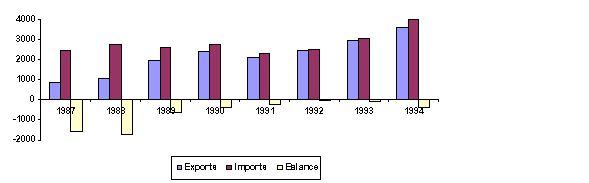
Source : Statistical Yearbooks of Vietnam 1992, 1993.
Table 4: Export growth rates of Asian countries (%)
China
Hong Kong
Indonesia
India
South Korea
Philippines
Singapore
Taiwan
Thailand
Vietnam
Sources Statistical Yearbooks of Vietnam 1992, 1993
Asian Economic Outlook 1993.
過去数年間、ベトナム経済の部門構造はゆっくりと変化してきた。
農業の比率は1987年の41.4%から1994年には35.0%へ低下した。
景気後退期とGDP比の低下を経た後、工業はその地位を回復し始めた。
サービス部門は1987年の33%から1994年には39.0%へと大きく増加した。
この経済構造の変化は主として市場経済への移行によるものであり、
投資の成長や投資構造の変化によるものでは、まだない。
次の表(表3)は、ベトナムの経済構造をアジアのいくつかの国と比較したものである。
表3:アジア諸国のGDP構造(%)
| 国 | 農業 | 工業 | サービス | ||||||
| 1970 | 1980 | 1992 | 1970 | 1980 | 1992 | 1970 | 1980 | 1992 | |
| 中国 | 42.2 | 25.6 | 16.7 | 44.6 | 51.7 | 58.4 | 13.2 | 22.7 | 24.9 |
| 香港 | … | 0.9 | 0.2 | … | 32.0 | 42.6 | … | 67.2 | 76.3 |
| インドネシア | 35.0 | 24.4 | 17.9 | 28.0 | 41.3 | 42.9 | 37.0 | 34.3 | 39.3 |
| インド | 44.5 | 39.6 | 32.5 | 23.9 | 24.4 | 27.3 | 31.6 | 36.0 | 40.2 |
| 韓国 | 29.8 | 14.2 | 7.0 | 23.8 | 37.8 | 46.2 | 46.4 | 48.3 | 46.8 |
| マレーシア | … | 22.9 | 16.1 | … | 35.8 | 43.9 | … | 41.3 | 40.0 |
| フィリピン | 28.2 | 23.5 | 22.6 | 33.7 | 40.5 | 35.0 | 38.1 | 36.0 | 42.5 |
| シンガポール | 2.2 | 1.1 | 0.3 | 36.4 | 38.8 | 37.5 | 61.4 | 60.0 | 62.2 |
| 台湾 | … | 7.9 | 3.7 | … | 46.0 | 42.6 | … | 46.1 | 53.7 |
| タイ | 30.2 | 20.6 | 13.1 | 25.7 | 30.7 | 37.4 | 44.1 | 46.7 | 49.5 |
| ベトナム | … | 42.7 | 38.2 | … | 26.3 | 23.8 | … | 31.0 | 30.0 |
出所:Asian Economic Outlook 1993。
なお、1989年価格で計算されたベトナムのGDP構造データには注意が必要である。
すなわち、当時の工業製品価格には国家補助の要素が残り、農産物やサービスの市場価格と比べて人工的に設定されていた。
したがって、工業の比率は実態より低く算出されている。
もし各国統計の作成に大きな誤差がなく、比較が可能だと仮定すれば、
ベトナムの実際の経済構造は、1970年以前のタイ、1970年以前のインドネシア、1980年のインドに近い。
ベトナムのGDPにおけるサービス部門比率は、現時点で比較的高い発展水準の国々に近い水準に達している。
将来この比率はそれほど増加せず、高成長をもたらすべき構造転換は工業発展へ向かい、
それに応じて農業の比率が低下すべきである。
各部門の構造変化を検討する際、構造転換は望まれるほど強くは起きていないことに留意すべきである。
農業では、前述のとおり畜産の比率は耕種に対して大きく変化していない。
工業では、原油増産によって燃料産業の比率が上昇する傾向を除けば、構造転換はまだ明確ではない。
サービスでは、商業が最大の比率を占め、第3次産業の付加価値の通常3分の1を占める。
一方で、市場経済において重要な金融・銀行・保険は、第3次産業付加価値の約4%にすぎない。
近年のベトナムの構造変化における重要な傾向は、輸入代替型生産から輸出志向型生産への力強い転換である。
外貨を獲得して工業化費用を賄うため輸出を促進するという考え方は以前からあったが、
過去のベトナムの政治経済的背景の下では実行できなかった。
ところが、生産拡大と対外経済関係の自由化を目指す政策により、ベトナムは発展の道で大きく前進できるようになった。
とりわけ原油生産と米輸出の急増により、輸出額は大きく伸びた。
1991年を除けば(同年は、相互経済援助会議の解体により旧ソ連・東欧諸国との契約市場を失った)、
ベトナムは概して輸出を増加させてきた。
それに対応して、輸入は1989~1991年に減少した。
直近2年では国際収支は改善した(図2参照)。
図2:ベトナムの輸入・輸出(1987~1994年)
出所:ベトナム統計年鑑 1992、1993。
アジア諸国は一般に高い輸出成長率(多くは年10%超)を確保しており、
タイや香港のように20%超の地域もあった。
フィリピン(1990・1991年)、インド(1991・1992年)、台湾(1990年)を除けば、
輸出の伸びが非常に低かったのは政治的要因によるものであり、
概してこの輸出増加は域内の貿易関係の発展に合致している。
これは、ベトナム経済が域内他国の経済とより緊密に結びつくことを促した(表4参照)。
表4:アジア諸国の輸出成長率(%)
| 1987 | 1988 | 1989 | 1990 | 1991 | 1992 | 1993 | |
| 中国 | 34.9 | 18.2 | 5.3 | 19.2 | 14.4 | 16.5 | 16.0 |
| 香港 | 36.8 | 30.3 | 15.8 | 12.3 | 20.0 | 21.2 | 20.0 |
| インドネシア | 19.5 | 13.4 | 17.8 | 16.7 | 9.8 | 13.5 | 13.0 |
| インド | 16.0 | 13.7 | 19.5 | 12.2 | 0.6 | 2.1 | 12.2 |
| 韓国 | 36.4 | 29.0 | 3.0 | 2.8 | 10.2 | 8.1 | 8.6 |
| フィリピン | 18.1 | 23.7 | 10.6 | 4.7 | 8.0 | 9.8 | 11.5 |
| シンガポール | 28.7 | 38.3 | 13.8 | 17.2 | 12.1 | 6.0 | 8.6 |
| 台湾 | 34.8 | 13.2 | 9.2 | 1.4 | 13.0 | 7.1 | 8.1 |
| タイ | 31.7 | 36.1 | 25.7 | 15.0 | 23.8 | 17.8 | 18.4 |
| ベトナム | - | 21.6 | 87.4 | 23.5 | -13.2 | 18.6 | 19.7 |
出所:ベトナム統計年鑑 1992、1993/Asian Economic Outlook 1993。
3. マクロ経済環境 / 3. MACRO-ECONOMIC ENVIRONMENT
Prices have been set according to demand and supply relationship on the market since 1989. The official exchange rate and the market exchange rate have been drawn closer to each other, and since mid-1991, an unique exchange rate has prevailed. The State has been intervening in adjustment and regulation to secure a relative stability for Vietnam's currency. Though this policy is still being hotly discussed as regards its effect on exports, one thing is clear that it has a positive impact on the mentality of domestic investors and consumers.
The most striking feature was the curbing of galloping inflation. The price index from 3 digits in 1988 was gradually reduced and stood only at 5.5% in 1993. In 1994 the inflation rate insreased to 14% again. The prices of goods and services in 1994 have increased owing to the following reasons:
- the government has carried out wage reforms from March 1993;
- a number of imported products such as fertilizers and cotton in the world market have increased in prices. Even the prices of several important home-made products such as electricity and paper have increased.
- the government has used several measures of intervention with a view to raising the price of agricultural products (such as purchase of rice to store in the national food reserve fund and increase of exports). On other hand, the quality of rice for export and domestic consumption has improved which has raised selling prices. As a result, the prices of foodgrains and foodstuffs have increased more rapidly than other commodities (See Table 5).
Table 5: Index of retail price (percent)
|
|
|
|
|
| |
|
- Commodities and services |
|
|
|
|
|
|
Commodities |
|
|
|
|
|
|
+ Food and foodstuffs |
|
|
|
|
|
|
# Food |
|
|
|
|
|
|
# Foodstuffs |
|
|
|
|
|
|
+ Non-food commodities |
|
|
|
|
|
|
Services |
|
|
|
|
|
|
- Gold |
|
|
|
|
|
|
- U.S.dollar |
|
|
|
|
|
* Nine first months of 1994
Source : General Statistical Office 1994.
Vietnam has been successful in cutting down her public
expenditures and in controlling inflation, thereby biulding an
effective financial system. The taxation system is being reformed to
be suit the new circumstances. In former times, budgetary receipts
were mostly derived from the contributions of State-owned businesses.
Now Vietnam has been gradually shifted to the collection of different
taxes ranging from turnover tax, profit tax, natural resources
exploitation tax, land tax, export and import tax and income tax. At
present is under consideration the application of an value added
tax.
The banking system has undergone a radical transformation to adapt
itself to the requirements of the market economy. The interest rates
of savings bank deposits have been adjusted in time with the aim of
attracting more funds available among the population. In the coming
time, Vietnamese banks must strive to raise their professional
capabilities in order to effectively compete with foreign banks in
the monetary market.
One thing should be considered that from the analysis of the
distribution of the GDP in the past few years, it was seen that the
rate of savings was still very low, accounting only for about 13% of
the GDP. Compared with the average rate of savings ranging from 17 to
25% in developing countries, or even from 30 to 34% in China, this
proves to be a worrisome figure because with it a decrease in the
growth rate would be a real danger. In order to ensure an average
annual growth rate of no less than 8%, the total capital invested
must account for at least 20-25% of the GDP. At present, it is only
one half of that required figure. The rate was 4.8% in 1991, 6.9% in
1992 and 12.7% in 1993.
近年のベトナムの経済改革の成功は西側の経済学者からも好意的に語られており、
その主因はマクロ経済環境の改善にある。
1989年以降、価格は市場における需要と供給関係に基づいて設定されている。
公式為替レートと市場為替レートは相互に近づき、1991年半ば以降は単一の為替レートが支配的となった。
国家はベトナム通貨の相対的安定を確保するため、調整と規制に介入してきた。
この政策が輸出に与える影響については今なお激しく議論されているが、
国内の投資家と消費者の心理に対して肯定的な影響を持つことは明らかである。
最も顕著なのは、暴走的インフレの抑制であった。
1988年に3桁だった物価指数は徐々に低下し、1993年には5.5%にとどまった。
1994年にはインフレ率が再び14%へ上昇した。
1994年に財・サービス価格が上昇した理由は次のとおりである。
- 政府が1993年3月から賃金改革を実施したこと。
- 肥料や綿花など輸入品の世界市場価格が上昇したこと。
さらに、電力や紙など国内の重要製品の価格も上昇したこと。
- 政府が農産物価格引上げのため、いくつかの介入策を講じたこと
(国家食糧備蓄基金に保管するための米買い入れ、輸出拡大など)。
また、輸出および国内消費向け米の品質が改善し、販売価格が上昇した。
その結果、穀物や食料品の価格は他の商品より速く上昇した(表5参照)。
表5:小売物価指数(%)
| 1991 | 1992 | 1993 | 1994* | 1991-94 | |
| ・商品およびサービス | 67.5 | 17.5 | 5.2 | 9.9 | 127.5 |
| 商品 | 71.8 | 13.9 | 3.1 | 10.2 | 122.3 |
| +食料および食料品 | 72.4 | 6.4 | 7.6 | 16.1 | 129.2 |
| # 食料 | 54.2 | -14.7 | 6.3 | 19.7 | 67.4 |
| # 食料品 | 83.5 | 18.2 | 7.8 | 14.3 | 164.2 |
| +非食料商品 | 70.4 | 21.7 | -0.4 | 4.0 | 114.8 |
| サービス | 40.5 | 41.1 | 19.2 | 8.9 | 157.3 |
| ・金 | 88.7 | -31.3 | 7.4 | 7.8 | 50.1 |
| ・米ドル | 103.1 | -25.8 | 0.3 | 1.1 | 52.8 |
* 1994年は最初の9か月
出所:統計総局(General Statistical Office)1994。
ベトナムは公的支出の削減とインフレ抑制に成功し、効果的な財政制度を構築してきた。
税制は新たな状況に適合するよう改革されている。
かつては予算収入の大部分が国営企業からの拠出に依存していたが、
現在は売上税、利益税、天然資源採掘税、土地税、輸出入税、所得税など多様な税の徴収へと段階的に移行している。
現在、付加価値税(VAT)の導入が検討されている。
銀行制度は市場経済の要請に適応するため抜本的変革を受けた。
貯蓄預金金利は、住民の保有資金をより多く吸収する目的で適時に調整されてきた。
今後、ベトナムの銀行は、通貨市場で外国銀行と効果的に競争するため、専門能力を高めなければならない。
ただし留意すべき点として、近年のGDP分配の分析から、貯蓄率は依然として非常に低く、GDPの約13%にすぎないことが分かる。
途上国の平均貯蓄率(17~25%)や、中国の30~34%と比べると、
成長率低下の危険が現実となり得る、憂慮すべき数値である。
年平均8%以上の成長率を確保するには、総投資はGDPの少なくとも20~25%を占めねばならない。
現在は必要水準の半分にすぎない。
1991年は4.8%、1992年は6.9%、1993年は12.7%であった。
4. 経済発展のための対外資源 / 4. EXTERNAL RESOURCES FOR ECONOMIC DEVELOPMENT
This strategy has planned that for doubling the per capita GDP, Vietnam would need an amount of invested capital to the order of 40-50 billion US dollars, of which foreign funds derived from ODA, credit loans, foreign adids, direct investment, issue of debentures etc. should make up 50 per cent.
First of all, Vietnam must strive to improve and expand her relations with international financial and monetary institutions. She is a member country of the IMF and WB since 1950 and of ADB since 1966. From the early 1980s, those organizations did not lend any money to Vietnam for political reasons.
From 1990 to now, due to economic recovery and growth, especially to rapidly increased exports, Vietnam has paid back a number of debts long overdue. On July 2, 1993 US President Bill Clinton opened the way for the relations to be resumed between international financial organizations and Vietnam. Immediately after his declaration, financial and banking organizations granted credit to Vietnam. Since October 7, 1993, relations with IMF, WB and ADB have been normalized. ADB began to lend to Vietnam 127 million US dollars in 4 years 1993-1996. According to provisions, ADB will lend Vietnam 300 million US dollars in 1994 and 350 million US dollars for 1995 and 1996 (with interest rate of 1% per annum during 40 years) for development purposes.
On November 1, 1993, the WB agreed to grant to Vietnam a loan of 228.5 million US dollars for two projects on infrastructure development, namely to help develop the primary education system and upgrade highway No. 1A. Subsequently, in the three coming years, WB will provide Vietnam with a a credit of 1 billion US dollars. This program of financial assistance shall be concentrated in the reorganization of State-owned enterprises, in the liberalization of the capital and labour market, in the encouragement of exports, and last but not least in the attraction of private capital into the domains of communications and energy.
Thus, after 15 years, three major international financial organizations have resumed on a much larger scale financial aid to Vietnam. In the 1993-1994 fiscal year alone, the sums of money lent to Vietnam amounted to 850 million US dollars. A meeting of developed countries held in November 1994 in Paris announced that they would lend to Vietnam 2 billion US dollars in 1994-1995.
Several other international and national financial organizations have also signed agreements on loans to Vietnam.
Though the financial aid from outside has regularly been provided for Vietnam's development projects, what is worrying most is that Vietnam may become a country where debts weigh heavily on the shoulders not only of the present but also coming generations.
In Vietnam, the weakest link in the management and use of loaned capital in past times was having an institution responsible for refunding. In order to overcome this defect, the government issued the decision No. 58/CP dated August 30, 1993, by which the power of coordinating the loans and the money uses was concentrated in the hands of the State Planning Committee (SPC). A national Council in charge of bidding and contracting was set up under the chairmanship of the head of the SPC. The Ministry of Finance and the State Bank are assigned to manage the loaned funds to be distributed to infrastructure projects such as transport and communications, public health care and education.
Vietnam is developing bilateral relations with other countries. She strives her best to attract direct foreign investment which appropriately conforms to Vietnam's actual circumstances. This helps provide Vietnam with more funds and new technologies, create more jobs and raising income earnings.
Vietnam's new law on foreign investment was promulgated in 1987. Compared with corresponding laws now prevailing in other countries in the Asian region, Vietnam's foreign investment law is quite open and more suited to investors' requirements, thereby seemingly more attractive in terms of its provisions. Counting from the date of promulgation of the law to August 31, 1994, Vietnam has granted licences to 868 projects from investors of 51 countries and territories (not including licences withdrawn for one reason or another) with an aggregate registered capital of 9.139 billion US dollars. The legal capital is 4.927 billion US dollars, with the Vietnamese partners contributing 33.77% of the total invested capital and the foreign partners the rest (66.23%).
Among different forms of projects with foreign investment, about 64% of foreign investment projects are joint ventures between foreign and Vietnamese partners. According to the Vietnamese Law on Foreign Investment, the foreign capital in joint ventures is not limited by a "celling percentage" (such as the shares 49/51 in some other countries), but it should be lower than 30% of total status capital.
Nearly 28.5% of projects are businesses with 100% foreign-owned capital. There are now 329 these businesses with invested capital of 2.4 bil. US dollars. The form of business with 100% foreign-owned capital is allowed in the cases when the most of products of business are used for exports, or when business is located in the Export Processing Zones and Industrial Estates. Branches of foreign banks belong to this kind of business.
Business cooperation contract signed between Vietnamese and foreign partners is one of the forms of foreign investment involvement. In this case there isn't any new business legatity established. The foreign partner should fulfil the financial duties according to the Law on Foreign Investment, and the Vietnamese partner - to the laws on domestic companies. Most of the projects in oil and gas exploitation, importing materials and exporting processed goods are conducted in the form of this business contracts. There have been 86 such projects licenced with more than 2 bil. US dollars.
The foreign investment projects are classified according to economic branches as follows (see Table 6).
The following tendencies might be observed in foreign investments in Vietnam:
- First, the rate of increase in investment capital is high. From 1988 to 1992, this capital rose averagely by 51.6% every year. In 1992, this capital was equal to 70% of the aggregate capital of the four previous years added together. The year 1993 witnessed an increase by 40% compared to 1992;
- Second, the average size of investment capital for one project (not counting oil projects) has gradually increased with time. The size of capital for each project was 3.5 million US dollars during the years 1988-1990, 7.5 million in 1991, 7.6 million in 1992, and 9.9 million in 1993. Smaller scale projects with a capital of less than 5 million US dollars each account for over 70% of all projects, but make up only about 12% of the total registered capital;
- Third, there have been changes in the domain of investment. In the years 1988-1990 exploration and exploitation of oil and gas constituted the main preoccupation of foreign investors
Table 6: Foreign Direct Investment in Vietnam 1988-1994
|
|
% |
|
| |
|
Hotel & tourism |
|
|
|
|
|
Light industry |
|
|
|
|
|
Oil & gas |
|
|
|
|
|
Heavy industry |
|
|
|
|
|
Transport &communication |
|
|
|
|
|
Construction |
|
| |
|
|
Services |
|
|
|
|
|
Agric.& forestry |
|
|
|
|
|
Building EPZs |
|
|
|
|
|
Finance & banking |
|
|
|
|
|
Fishery |
|
|
|
|
|
Culture & Education & Health care |
|
|
|
|
|
Export-import |
|
|
|
|
|
TOTAL |
|
|
|
|
Sources : State Committee for Cooperation and Investment
1994
(accounting for 32.2% of the total investment capital), there
after came hotel business undertakings (20.6% of capital). But as
from 1991 onward, processing industries have occupied a predominant
position with 45% of the registered capital;
- Fourth, the form of investment with 100% foreign-owned capital is
tending to increase, from 6% of projects during the four years
1988-1991 to 17% in 1992 and to 28.5% at present. This increase is
due to the improved legal system in Vietnam which has on the one hand
inspired foreigners with much confidence in making investment and on
the other has kept foreign investors free from dispute and
controversy between partners in a joint venture;
- Fifth, there has been a transfer of investment- recipient
territory. The majority of projects lie in the three regions with
suitable infrastructural facilities. These are:
a/ in North Vietnam, that is the Hanoi capital - Haiphong port city -
Quangninh province triangle,
b/ in South Vietnam, that is the Ho Chi Minh City - Dongnai province
- Vungtau zone axis,
c/ in Central Vietnam, that is Danang city.
In the first years, North Vietnam did not attract much attention of
foreign investors, but in recent times it has attracted more and more
capital investment in projects designed to supply energy and raw
materials. This is chiefly due to a more improved infrastructure;
- Sixth, in the first years, investors were mainly small-sized
companies. In recent times, more and more big companies with abundant
capital and advanced technologies have joined in the investment
drive. West European companies at an early date made investments in
oil and gas exploration and exploitation, while their Asian
counterparts came later in this investment drive. But the latter's
percentage in the total capital invested in Vietnam has rapidly
increased and accounted actually for over 50% of projects and nearly
60% of registered capital.
Up to now, after 6 years of implementation of the law on foreign
investment, the positive socio-economic effect of investment is
strongly felt. Businesses with foreign capital have created nearly
50,000 jobs in their own establishments and about 100,000 jobs in the
service sector connected with their undertakings. The State budget
could derive more receipts from the taxes levied on those businesses.
In six years, these businesses have produced goods and services worth
780 million US dollars, and have also applied a number of new
technologies in telecommunication, oil and gas exploration,
electronic industry and agriculture. Vietnamese businessmen have
gained much experience in management and business operations.
Naturally, there have been also setbacks and failures. Due to
different causes and factors, 114 projects had seen their licences
withdrawn ahead of the time-limit (accounting for 14.3% of total
licence-granted projects and making up nearly 8.8% of total
investment capital in the six years from 1988 to 1993). There were no
few projects which could not meet the requirement in high technology
and economic efficiency. The majority of workers' strikes, which are
a rare phenomena in Vietnam's society, have taken place in
enterprises with foreign capital. The shift of qualified and skilled
laborers from the indigenous economic sector to the sector with
foreign-funded enterprises is rapidly gaining in scope along with an
increase in available funds. Those are phenomena deserving a constant
attention from the government so as to issue policies suited to the
socio-economic situation.
In spite of all that, foreign investment will continue to play an
important role in Vietnam's economic development. In coming decades,
when the source of accumulated funds from inside the country is not
made available in desired amounts, foreign capital shall make up a
bigger proportion in the total invested capital. It will be perhaps a
big push to development.
ベトナムは外部資源からの資金提供を高く評価している。
ベトナム指導部は「2000年までのベトナム社会経済安定化・発展戦略」において、
「外国からの資金を引き付け、対外援助と支援を確保し、低利で借入を行う努力をすべきである」と確認した。
同戦略では、一人当たりGDPを倍増させるために、400~500億米ドル規模の投資資金が必要であり、
そのうちODA、信用借款、対外援助、直接投資、社債発行などによる外国資金が50%を占めるべきだと計画している。
まず、ベトナムは国際金融・通貨機関との関係を改善し拡大する努力をしなければならない。
ベトナムは1950年からIMFと世界銀行(WB)の加盟国であり、1966年からアジア開発銀行(ADB)の加盟国である。
しかし1980年代初頭以降、これらの機関は政治的理由によりベトナムへの融資を停止していた。
1990年以降、経済回復と成長、とりわけ輸出の急増により、ベトナムは長期延滞していた債務の一部を返済した。
1993年7月2日、ビル・クリントン米大統領は、国際金融機関とベトナムの関係再開への道を開いた。
彼の声明直後、金融・銀行機関はベトナムに信用供与を行った。
1993年10月7日以降、IMF、WB、ADBとの関係は正常化した。
ADBは1993~1996年の4年間でベトナムに1億2700万米ドルを融資し始めた。
規定によれば、ADBは1994年に3億米ドル、1995年と1996年に各3億5000万米ドルを、
開発目的のために融資する(年利1%、40年)。
1993年11月1日、WBはインフラ開発に関する2プロジェクト、
すなわち初等教育制度の整備と国道1A号線の改修のため、2億2850万米ドルの融資をベトナムに供与することに同意した。
その後3年間で、WBはベトナムに10億米ドルの信用供与を提供する予定である。
この金融支援プログラムは、国有企業改革、資本市場と労働市場の自由化、輸出奨励、
そして何より通信とエネルギー分野への民間資本誘致に重点を置く。
このように、15年を経て、主要3国際金融機関はより大規模にベトナムへの金融支援を再開した。
1993~1994会計年度だけでも、ベトナムへの融資額は合計8億5000万米ドルに達した。
1994年11月にパリで開催された先進国会議では、1994~1995年に20億米ドルをベトナムに貸与することが表明された。
さらに、他の国際・国内の金融機関もベトナムへの融資協定を締結している。
対外資金はベトナムの開発プロジェクトのために定常的に供与されてきたが、
最も懸念されるのは、ベトナムが現在世代だけでなく将来世代の肩にも重くのしかかる債務国となる可能性である。
ベトナムでは、過去における借入資金の管理・利用の最も弱い環は、返済責任を負う機関の不備であった。
この欠陥を克服するため、政府は1993年8月30日付の決定第58/CP号を発出し、
借入および資金使用の調整権限を国家計画委員会(SPC)に集中させた。
SPC議長を長とする入札・契約担当の国家評議会が設立された。
財務省と国家銀行は、交通・通信、公衆衛生、教育などインフラ・プロジェクトに配分される借入資金の管理を担う。
ベトナムは各国との二国間関係も発展させている。
また、ベトナムの実情に適合する直接外国投資の誘致に最善を尽くしている。
それにより資金と新技術の導入、雇用創出、所得向上が期待できる。
ベトナムの外国投資に関する新法は1987年に公布された。
アジア地域の他国の類似法と比べて、ベトナムの外国投資法はかなり開放的で投資家要求に適合しており、
規定面で魅力的と見なされている。
法公布から1994年8月31日までに、ベトナムは51の国・地域の投資家による868件のプロジェクトに許可を与えた
(何らかの理由で撤回された許可を除く)。
登録資本総額は91億3900万米ドルである。
法定資本は49億2700万米ドルで、ベトナム側パートナーが総投資資本の33.77%、
外国側パートナーが残り66.23%を拠出している。
外国投資プロジェクトの形態別では、約64%が外国側とベトナム側の合弁である。
ベトナム外国投資法では、合弁における外国資本比率は、
他国のような49/51といった「上限(celling percentage)」で制限されないが、
総法定資本の30%より低いべきであるとされている。
約28.5%は、外資100%出資の企業である。
現在329社があり、投資資本は24億米ドルである。
外資100%企業形態は、製品の大部分が輸出向けである場合、または輸出加工区・工業団地に立地する場合に認められる。
外国銀行支店もこの形態に属する。
ベトナム側と外国側の間で締結される事業協力契約は、外国投資関与の形態の一つである。
この場合、新たな法人は設立されない。
外国側は外国投資法に基づく財政義務を履行し、ベトナム側は国内企業法に従う。
石油・ガス開発、原材料輸入と加工品輸出の多くは、この契約形態で行われている。
こうしたプロジェクトは86件許可され、総額は20億米ドル超である。
外国投資プロジェクトは経済部門別に分類できる(表6参照)。
ベトナムの外国投資には次の傾向が観察される。
- 第一に、投資資本の増加率が高い。1988~1992年の平均増加率は年51.6%である。
1992年の投資資本は、過去4年間の合計の70%に相当した。
1993年は1992年に比べ40%増加した。
- 第二に、(石油プロジェクトを除く)1件あたり投資規模が時間とともに増加している。
1988~1990年は平均350万米ドル、1991年は750万、1992年は760万、1993年は990万米ドルであった。
500万米ドル未満の小規模プロジェクトは件数で70%超を占めるが、登録資本総額では約12%にすぎない。
- 第三に、投資分野の変化がある。1988~1990年は石油・ガスの探査・開発が外国投資家の主たる関心であった。
表6:ベトナムの外国直接投資(1988~1994年)
| プロジェクト数 | % | 登録資本(百万米ドル) | % | |
| ホテル・観光 | 113 | 13.0 | 1905.8 | 20.9 |
| 軽工業 | 221 | 25.5 | 1414.9 | 15.5 |
| 石油・ガス | 25 | 2.9 | 1281.1 | 14.0 |
| 重工業 | 127 | 14.6 | 1247.5 | 13.6 |
| 交通・通信 | 57 | 6.6 | 759.3 | 8.3 |
| 建設 | 65 | 7.5 | 744.9 | 8.1 |
| サービス | 73 | 8.4 | 728.3 | 8.0 |
| 農業・林業 | 117 | 13.5 | 446.6 | 5.0 |
| 輸出加工区(EPZ)造成 | 5 | 0.6 | 306.8 | 3.3 |
| 金融・銀行 | 16 | 1.8 | 152.9 | 1.6 |
| 水産業 | 27 | 3.1 | 94.3 | 1.0 |
| 文化・教育・医療 | 21 | 2.4 | 36.2 | 0.3 |
| 輸出入 | 1 | 0.0 | 0.3 | 0 |
| 合計 | 868 | 100.0 | 9139.3 | 100.0 |
出所:国家計画委員会(State Planning Committee)。
(登録投資資本総額の32.2%を占める)分野に続いて、ホテル事業(資本の20.6%)が続いた。しかし1991年以降は、加工産業が登録資本の45%を占め、支配的な地位を占めるようになった。
- 第四に、投資形態の比率に変化がある。合弁形態は依然として多数を占めるが、外資100%企業の比率が増加している。
合弁形態は一方で外国人に投資上の自信を与え、他方で合弁相手間の紛争・論争から外国投資家を自由にしてきた。
- 第五に、投資受入地域の移動が見られる。プロジェクトの大半は、インフラ条件の整った3地域に集中している。すなわち、
a) 北部:ハノイ首都―ハイフォン港湾都市―クアンニン省の三角地帯、
b) 南部:ホーチミン市―ドンナイ省―ブンタウ地域の軸、
c) 中部:ダナン市。
当初、北部は外国投資家の関心をあまり引かなかったが、近年ではエネルギーや原材料供給を目的とするプロジェクトへの投資が増えている。
これは主としてインフラが改善したためである。
- 第六に、初期には投資家は主として小規模企業であったが、近年は豊富な資本と先進技術を有する大企業が投資活動に参加するようになった。
西欧企業は早い時期から石油・ガスの探査・開発に投資し、アジア企業は遅れて参入した。
しかし後者の、ベトナムへの投資総額に占める比率は急速に増加し、現在ではプロジェクト数で50%超、登録資本の約60%を占めている。
外国投資法の施行から6年が経過した現在、投資の積極的な社会経済効果は強く感じられる。
外資系企業は自社施設で約5万人の雇用を創出し、関連するサービス部門でも約10万人の雇用を生み出した。
国家予算は、それら企業に課される税からより多くの歳入を得ることができる。
6年間でこれら企業は7億8,000万米ドル相当の財・サービスを生産し、いくつかの新技術も導入した。
しかし、外国投資には否定的側面も存在する。外資系企業はまだ小規模であり、その活動は大きな影響を与えるには至っていない。
外国投資家の中には、ベトナムの法律を十分に遵守していない者もいる。
環境汚染を引き起こす事業もある。
また、外資系企業への労働力移動は、投資資金の増加とともに急速に拡大している。
これらは、政府が社会経済状況に適合した政策を打ち出すため、継続的に注意を払うに値する現象である。
それにもかかわらず、外国投資は今後もベトナムの経済発展において重要な役割を果たし続けるであろう。
今後数十年、国内の蓄積資金が望ましい規模で確保できない間は、外国資本は総投資資本に占める比率を高めるはずである。
それはおそらく、発展への大きな推進力となる。
5. 結語 / 5. Concluding remarks
However, the economy still bears an agricultural character. Industry is not yet up to the mark. Production capacity is still inadequate to be mobilized for bigger undertakings in the coming period of time. If increased capital investments are not to be obtained from outside, the rate of economic growth may not maintain the same level as it is now. The curbing of inflation is not yet steady. The state budget deficit is not yet completely eliminated with a permanent excess of expenditures over recepts. The State hasn't enough money to service its foreign debts which are much bigger than the annual export turnover.
The legal system is not yet effecient, and more seriously still, law execution is not as strict as it should. Unemployment is commonplace everywhere, especially among working age youth. It constitutes a burning problem that society should immediately tackle and also one of the causes engendering social evils.
In order to encourage the socio-economic development in the coming year, there are six key issues raised by the Vietnam's Government as follows:
- Urgent reform of financial and monetary systems;
- Heightening the quality of development planning;
- Developing the overall strength of all economic sectors;
- Using new advantages to develop external economic relations;
- Reforming the educational system and improving the human factor;
- Reforming the administrative system as part of economic reform.
ベトナム経済は危機的時期を乗り越え、離陸へ向けて動き始めている。
食料生産、石油採掘、電力・セメント・鋼鉄・紙など重要品目の生産拡大、輸出の増加、インフレ抑制などの成果は、
改革路線の正しさを示している。
しかし同時に、なお多くの困難が存在する。
産業の技術水準は低く、競争力は弱い。
生産・経営の効率は高くない。
財政・通貨制度、金融・銀行制度、税制、投資制度などは、引き続き改革を必要としている。
法制度はまだ効率的ではなく、さらに深刻なことに、法の執行は本来あるべきほど厳格ではない。
失業は各地で一般的であり、とくに就業年齢の若者に多い。
これは社会が直ちに取り組むべき喫緊の問題であると同時に、社会悪を生み出す要因の一つでもある。
今後一年の社会経済発展を促進するため、ベトナム政府は次の6つの主要課題を掲げている。
- 財政・金融制度の緊急改革;
- 開発計画の質の向上;
- あらゆる経済部門の総合力の発揮;
- 新たな優位性を活用した対外経済関係の発展;
- 教育制度改革と人的要因の向上;
- 経済改革の一環としての行政制度改革。
※日本語訳:日本・ベトナム交流促進センターにて ChatGPT 5.2 を使用