0. Intro / はじめに
VIETNAM'S SOCIO-ECONOMIC DEVELOPMENT No.7
INDUSTRIAL RESTRUCTURING AND THE STRATEGY OF INDUSTRIALIZATION
PHAM QUANG HAM
* Dr. Pham Quang Ham is the Head of the Department of Industry at the Development Strategy Institute, Ministry of Planning and Investment, Hanoi.
VIETNAM'S SOCIO-ECONOMIC DEVELOPMENT No.7
工業再編と工業化戦略
PHAM QUANG HAM
* Pham Quang Ham 博士は国家計画投資省開発戦略研究所工業部長。
1. 近年の工業再編 / 1. INDUSTRIAL RESTRUCTURING IN RECENT YEARS
As the industrial sector assumes a crucial position in the process of economic development, the results generated by the political line of renovation of the industrial sector are highly important. In particular:
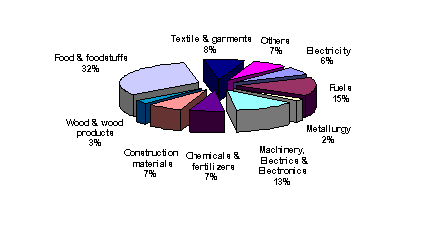
1. In spite of various difficulties, many advances the industrial sector created preconditions for its further development. During the years 1990-1994 the average annual growth rate of industrial production was 12.3 percent (Figure 1). This gain led to a shift in the economic structure as the proportion of industry and construction in GDP increased from 22.6 percent in 1990 to 29.6 percent in 1994 (Figure 2). The technological and technical composition of different economic sectors and branches has also recorded significant changes. Technological innovation has become a pressing requirement for the national economy. Some advanced technologies have been introduced and applied, such as information technology and electronics.
Some economically meaningful industrial products have shown high growth rates: electricity, crude oil, cement, fertilizers, as well as some exportable consumer goods and products of food industry. The industrial enterprises and production establishments have paid more attention to the quality and design of their products. They have shown more initiative and flexibility in adjusting to the market requirements, due to the abolition of state subsidies and a more competitive environment.
Figure 1: Average annual growth rate of industries 1990-1994 (%, in 1994 prices)
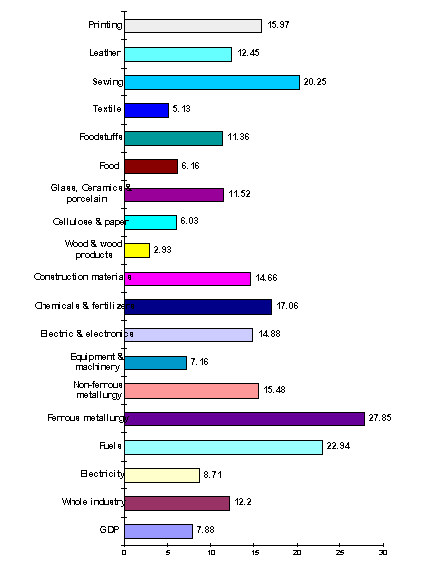
Figure 2: Structure of industry in 1994 (%)
2. In the industrial sector, various economic components have been assisted to develop. The state-owned industrial enterprises have been rearranged and consolidated. The non-state industries have been promoted, particularly in processing agro-products, and in producing consumer goods and handicrafts. By the end of 1994, in the processing industry alone, there were already 8,866 establishments licensed. Among them, 58 percent were registered as private enterprises and another 17 percent as companies of limited liability. Additionally, for small and handicraft industries, there were 5,287 cooperatives and more than 450,000 private households involved in production activities.
3. External economic relations have further developed. FDI in general and investments into the industrial sector in particular have shown a rapidly increasing trend. The export volume has recorded an average annual growth rate of 20 percent, of which the industrial sector shares an important part, accounting for over 50 percent of the country's total export volume. Six export-processing zones (EPZ) have been granted licenses.
There are several problems to be addressed: (a) The industrial sector still has only small productive capacity; (b) The industrial structure has slowly changed—growth has principally resulted from mining, while manufacturing branches have contributed little; (c) Though the economy began to generate internal capital resources, such resources are still small and scattered; (d) The low technological level implies high norms of material spending, low productivity and low quality; (e) The infrastructure is still weak; (g) Some state-owned industrial establishments have not successfully adapted to the new mechanism.
工業部門は経済発展のプロセスにおいて重要な位置を占めるため、工業部門の革新路線によって生み出された成果は極めて重要である。特に:
1. 様々な困難にもかかわらず、工業部門の多くの進展がさらなる発展の前提条件を創出した。1990~1994年の工業生産の年平均成長率は12.3%であった(図1)。この成果は経済構造の変化をもたらし、GDPに占める工業・建設の割合は1990年の22.6%から1994年の29.6%に増加した(図2)。諸経済部門・産業の技術的構成も大きな変化を示した。技術革新は国民経済の喫緊の要請となっている。情報技術や電子工学などの先進技術が導入・適用されている。
経済的に有意義な工業製品の一部は高い成長率を示した。電力、原油、セメント、肥料、および輸出可能な消費財や食品産業製品が含まれる。工業企業および生産施設は製品の品質とデザインにより多くの注意を払うようになった。国家補助金の廃止とより競争的な環境により、市場需要への調整においてより多くの主体性と柔軟性を示している。
図1:1990-1994年工業の年平均成長率(%、1994年価格)
図2:1994年工業構造(%)
2. 工業部門において、各種経済構成要素が発展するよう支援されてきた。国有工業企業は再編・統合された。非国有工業、特に農産物加工、消費財・手工業生産が促進された。1994年末時点で、加工業のみで8,866の認可施設があった。うち58%が民間企業、17%が有限責任会社として登録された。さらに小規模・手工業については、5,287の協同組合と45万超の民間世帯が生産活動に従事していた。
3. 对外経済関係はさらなる発展を遂げた。FDI一般および工業部門への投資は急速に増加する傾向を示した。輸出量は年平均20%の成長率を記録し、工業部門がその重要な部分を占め、国の総輸出量の50%超を占めた。6つの輸出加工区(EPZ)に認可が付与された。
対応すべき諸課題がある。(a) 工業部門の生産能力は依然として小さい;(b) 工業構造の変化は緩やか—成長は主に鉱業に由来し、製造部門の寄与は小さい;(c) 経済は内部資本資源を生み出し始めたが、その資源は依然として小さく分散している;(d) 低い技術水準は高い原材料消費基準、低生産性、低品質を意味する;(e) インフラは依然として弱い;(g) 一部の国有工業施設は新メカニズムへの適応に成功していない。
2. 2000年までの工業発展の方向 / 2. INDUSTRIAL DEVELOPMENT ORIENTATIONS TO THE YEAR 2000
The long run objective is to develop a relatively comprehensive industrial sector, in order to transform Vietnam from a backward agriculture-based country into an industrialized one within two decades. During 1996-2000, conditions should be created for the industrial sector to develop at an annual rate of 14-15 percent. The value added of the industrial sector is expected to reach 34-35 percent of GDP by the year 2000, exceeding that of agriculture. Priorities will be given to: (a) The food processing industry; (b) The consumer goods industry (textiles, garments, leather, shoes, building materials, etc.); (c) Oil and gas investigation, exploration and exploitation; (d) Reorganizing and consolidating the mechanical engineering industry; (e) Promoting the electronics and information technology industry; (g) Building bases of heavy industry in targeted fields; (h) Strong development of export-led industries.
Important policies include: bringing into full play combined forces of different economic components; renovating and consolidating state-owned enterprises; creating favorable conditions for the private sector; supporting small-and medium-scale enterprises; upgrading and constructing economic infrastructure; rehabilitating and consolidating industrial estates.
長期目標は、比較的包括的な工業部門を発展させ、ベトナムを遅れた農業国から20年以内に工業国に変えることである。1996~2000年期には、工業部門が年14~15%で発展する条件を創出すべきである。工業部門の付加価値は2000年までにGDPの34~35%に達し、農業を上回ると期待される。優先が与えられるのは:(a) 食品加工産業;(b) 消費財産業(繊維、衣料、皮革、靴、建材など);(c) 石油・ガスの探査、開発、採掘;(d) 機械工業の再編・統合;(e) 電子・情報技術産業の促進;(g) 対象分野における重工業基盤の建設;(h) 輸出主導型産業の強力な発展。
重要政策には、各種経済構成要素の合力を十分に発揮すること;国有企業の革新・統合;民間部門に有利な条件を創出すること;中小企業の支援;経済インフラの整備・建設;工業団地の復旧・統合、が含まれる。
3. 工業生産の地理的立地 / 3. GEOGRAPHICAL ALLOCATION OF INDUSTRIAL PRODUCTION
One of the most important issues is to pay special attention to equal development of different territorial regions. Concerning existing industrial estates: those in urban interior should receive in-depth investments for technological upgrading and environmental pollution resolution; those far from urban centers with adequate land should improve technical infrastructure and revise master plans. For new industrial estates: elaboration of a nation-wide overall master plan is required. In the immediate time, stress should be given to the 3 focal economic zones: Hanoi-Haiphong-Halong; Ho Chi Minh City-Bien Hoa-Vung Tau; and Lien Chieu-Dung Quat in the central region. For mountainous regions and Central highlands, special attention should be paid to infrastructure, and small-scale industrial formations linked with agriculture and forestry. To sum up, geographical allocation should be handled with clear awareness of targets and priorities, and attentively develop small-and medium-scale industries, particularly processing industries linked with agricultural raw materials, so that inter-regional development gaps will be gradually reduced.
※日本語訳:日本・ベトナム交流促進センターにて ChatGPT 5.2, Gemini 3, Cursor 2.4.32 を使用
最も重要な課題の一つは、各地域の均衡ある発展に特別な注意を払うことである。既存の工業団地について:都市内部にあるものは技術革新と環境汚染解消のための深掘り投資を受けるべきである;都市中心部から離れ十分な土地を有するものは技術インフラの改善とマスタープランの修正を行うべきである。新規工業団地について:全国的なマスタープランの策定が求められる。当面、3つの重点経済圏に重点が置かれるべきである。ハノイ・ハイフォン・ハロン;ホーチミン市・ビエンホア・ブンタウ;中部のリエンチェウ・ズンクアット。山岳地域と中部高地については、インフラに特別な注意を払い、農業・林業と結びついた小規模工業形成を発展させるべきである。要約すれば、地理的立地は目標と優先順位に関する明確な認識を持って扱われ、地域間の開発格差が段階的に縮小するよう、特に農業原材料と結びついた加工産業を含む中小規模工業を注意深く発展させるべきである。
※日本語訳:日本・ベトナム交流促進センターにて ChatGPT 5.2, Gemini 3, Cursor 2.4.32 を使用